
Browse by Category
- One person: Jesus Christ
- For One Mission: To Support The God Ordained Institution Of The Family
- According To One Standard: The Holy Bible
- For One Purpose: To Help Parents Rely On The Lord Jesus Christ as Their Ultimate Provider of Every Good Thing.
Welcome to My Blog

Once upon a time, there lived a kind and successful man who owned a company. Over time, he discovered that many of his employees were chronically late for work and worse, all were stealing from the company. This did not surprise him. In fact, he had anticipated their behavior and already had a plan in place.
The theft represents sin, and the plan represents God’s plan to send Jesus as the covering for our sin.
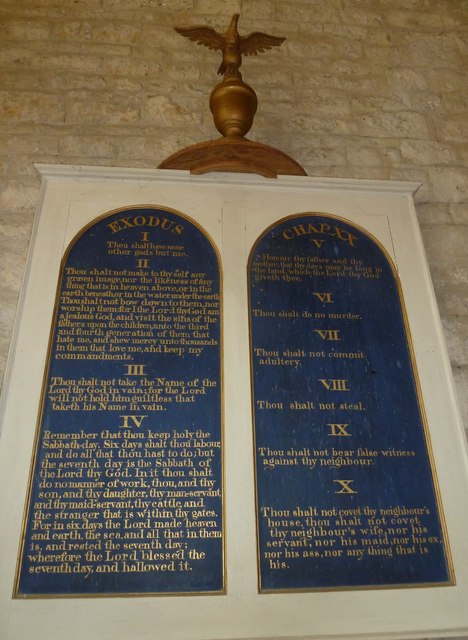
The owner gathered all of his employees into the conference room to address their conduct. On the wall hung a large board titled “The Ten Commandments of Company Success.” For the first time, the employees took these rules seriously and read them carefully.
These rules represent God’s law.
The owner then entered the room accompanied by a police officer and sat down with the employees who had committed theft; some guilty of major offenses, others of minor ones. Graciously, the owner announced that he personally covered the cost of everything that was stolen. Any employee who wished to stay employed could stay on staff, no questions asked, and without consequence. The owner’s greatest desire was that every employee would remain with him so they could succeed in all areas of life.
The owner represents Jesus, and the payment represents grace.
“For by grace you have been saved through faith. And this is not your own doing; it is the gift of God” (Ephesians 2:8).
Those who chose to leave the company would be subject to the law and prosecuted for their crime, since they were undeniably guilty. But anyone who chose to stay would have no record held against them and could continue working without shame or condemnation.
Prosecution represents the penalty for rejecting Jesus as Savior.
“But all who reject me and my message will be judged on the day of judgment by the truth I have spoken” (John 12:48).
The employer then reminded those who stayed with his company, about the Ten Commandments of Company Success. The employees had free will to follow the rules or to ignore them. However, choosing not to follow them would lead the employees on a dangerous path. A path where the employer wouldn’t always step in and save them.
This choice represents free will to live in opposition to Jesus’ teachings, and the consequences of that choice.
“Enter through the narrow gate. For wide is the gate and broad is the way that leads to destruction, and many enter through it” (Matthew 7:13).
The first rule of employment was simple: arrive at work on time. What the employees did not initially realize was that punctuality came with blessings. There would be a free buffet breakfast for any employee who arrived on time.
Along with physical nourishment however, came something more valuable- wisdom from the owner on how to remain on the best path within the company. This then, would put them in good standing with the owner and other benefits would follow.
The food represents God’s wisdom offered in the Bible. Further wisdom represents deeper truths that bless our life as we stay daily engaged with the Word.
“Blessed are those who hunger and thirst for righteousness, for they will be filled” (Matthew 5:6).
Among the pearls of wisdom the owner shared was this promise: he would be an enemy to their enemies. He explained that when conflict arose, if they refrained from taking matters into their own hands, he would fight for them. He assured them that his army was strong and victorious, and far greater than any force that could come against them.
The army represents God’s angels sent to help followers of Christ.
“Are not all angels ministering spirits sent to serve those who will inherit salvation?” (Hebrews 1:14).
During breakfast meetings, the owner instructed his employees to turn the other cheek, to be kind, and to forgive quickly. He explained that bitterness would only diminish the quality of their work and their very lives. Since their debt was forgiven by the employer, they were to extend that same forgiveness to others. He encouraged them to follow the Ten Commandments of Company Success not as a condition for keeping their jobs, but as a means of safety, peace, prosperity, and joy.
Following the company Commandments represents obedience to God.
“For the eyes of the LORD run to and fro throughout the whole earth, to show Himself strong on behalf of those whose heart is loyal to Him”(2 Chron 16:9)
As time went on, the employees learned even more about this remarkable man and his company. Those who were faithful to arrive at work on time and enjoy the teachings of their boss, discovered that they were actually heirs of the company. This privilege was reserved for those who trusted the owner and believed in his goodness and purpose. This “sonship” came with immediate benefits as well as future rewards when they eventually retired.
Perhaps the most astonishing benefit was that they were allowed to use the owner’s name, a name that carried great authority throughout the region. Whenever they meditated on his wisdom, they found out that they could speak as he spoke and see the same results. It was truly remarkable.
The employers name represents the powerful name – Jesus
“You can ask for anything in my name, and I will do it, so that the Son can bring glory to the Father.”(John 14:13 NLT)
Some employees never took advantage of this privilege, held back by unbelief or fear of appearing foolish. Others however, spent so much time listening to and learning from the owner that they came to trust him completely. They knew his words carried weight because he always spoke the truth. When the employees used the wisdom and words of their employer, they noticed they got the same result. His name truely carried weight.
Listening and learning from the owner represents daily Bible study and prayer “Keep this Book of the Law always on your lips; meditate on it day and night, so that you may be careful to do everything written in it. Then you will be prosperous and successful.”(Josh 1:8)
Over time, it became clear that the Ten Commandments of Company Success were never meant to trap or burden the employees. Nor were they a condition for staying employed, or a way to repay the owner for covering their debt. Instead, the commandments were given to protect them, guide them, and position them to live and work in freedom, peace, protection and success within the company.
The company represents God’s Kingdom on earth
In summary: Salvation has already been paid for through Jesus’ death. Therefore, God’s commands have a different purpose than they held in the Old Testament. They show believers how to live safely. Obedience keeps us close to God, where we clearly hear His guiding voice and He clearly hears and answers our Scripture based prayers.
We follow God’s commandments not to earn salvation, but because we are thankful to be saved. Our obedience is the outward expression of our faith in Him. In surrender, we demonstrate that we love God and have faith He will come through for us. Our obedience to His way of life shows our faith and faith is necessary to have miracles in our lives. “Whoever has my commands and keeps them is the one who loves me. The one who loves me will be loved by my Father, and I too will love them and show myself to them.”(John 14:21)
This same principle helps us, as parents, explain to our children why rules are a necessary part of life. Just as we benefit from following the guidelines of a reputable organization, rules exist to keep us safe, protected and positioned to thrive. They are not about losing our independence, but about gaining freedom to live wisely and joyfully within the boundaries designed for our protection.
In the same way, God does not promise protection when we persist in living contrary to His ways. Life apart from Him ultimately leads to destruction, because true life cannot be found when we choose a path opposite the Creator of life.
“My people are destroyed from lack of knowledge. “Because you have rejected knowledge, I also reject you…(Hosea 4:6a)
Food For Thought,
Lisa


